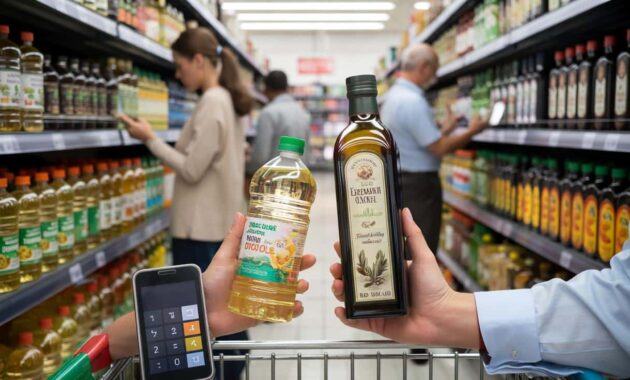
The supermarket shelf was the first clue that something had shifted. Where tall, emerald bottles of olive oil once formed a proud, shiny wall, there were gaps, little white labels shouting “Out of stock” and “New price.” A woman in a grey coat sighed, lifted a bottle, checked the total on her phone calculator, then quietly put it back. Her hand moved to a squat, unglamorous plastic bottle a shelf lower. Sunflower oil. Half the price. Into the cart it went without ceremony.
Around her, the same silent calculation played out again and again. Brand loyalty versus rent. “Mediterranean diet” versus electricity bill.
One oil was slowly being uncrowned, and another was quietly taking the throne.
When olive oil stops feeling like a basic and starts feeling like a luxury
For years, olive oil had this aura of untouchable goodness. It was the bottle you left out on the counter, the one you drizzled in slow motion over tomatoes because that’s what “healthy people” did. Then prices jumped. In some European countries, the cost of extra-virgin olive oil has nearly doubled in two years, squeezed by droughts, failing harvests, and speculators chasing a new “liquid gold.”
Suddenly, that casual drizzle started to sting. People began measuring instead of pouring. Shelves that once looked like a Tuscan postcard turned into a math problem. The Mediterranean dream met the monthly budget spreadsheet.
The revolt began in small kitchens. A student in Madrid told me she now buys just a tiny bottle of **decent olive oil** a month “for salads and guests,” and uses cheaper seed oil for everything else. A family in Lyon switched entirely to rapeseed oil after their grocery total crossed a psychological red line. In the UK, supermarket data showed shoppers trading down from extra-virgin to blended “Mediterranean oils,” then to sunflower, then to plain “vegetable oil.”
It’s quiet, almost shameful, this switch. People whisper it. “We’ve gone back to sunflower.” “I use canola now, honestly.” Like confessing they’ve fallen from some invisible healthy-eating standard. Yet the receipts don’t lie, and neither do pantry shelves.
Nutrition experts are split, and the internet has gone to war. One camp clings to the old story: olive oil equals heart health, long life, and chic salads by the sea. Another camp insists seed oils are “toxic,” pointing fingers at industrial processing, omega-6 fats, and inflammatory pathways. Then there’s a quieter group saying something deeply unsexy: context matters, dose matters, the rest of your diet matters more than your choice of drizzle.
This clash is less about science than it is about identity. Olive oil became a symbol of a lifestyle, sold in travel ads and wellness posts. Replacing it with a budget bottle feels like a tiny betrayal of that story.
How people are actually cooking now that olive oil is so expensive
The most pragmatic cooks have invented a new rule: “Save the olive oil for taste, not for heat.” They keep a small bottle of **good extra-virgin** for finishing dishes and a big, cheaper bottle of neutral oil for frying and roasting. It sounds simple, but it changes the mood in the kitchen. Instead of panic-pouring and worrying about every cent, they portion the “fancy” stuff with intention.
➡️ Why placing a spoon in a bottle of sparkling water helps keep the bubbles longer
➡️ If you feel unsettled after positive changes, psychology explains the internal recalibration
➡️ Not once a week, not on alternate days : dermatologist explains how often we should wash our hair
They heat sunflower or rapeseed oil for everyday tasks: sautéing onions, crisping potatoes, frying eggs. Then, when the pan is off the stove, they add a spoon or two of olive oil for aroma and that unmistakable peppery throat tickle. You can feel the relief in that gesture.
One mother in Naples explained her new system with a kind of defiant pride. She buys a robust, cloudy olive oil from a cousin’s village and guards it like perfume. “This,” she said, tapping the dark glass, “is for raw.” Her kids get it on bread, on beans, on salad. For frying their beloved crocchette, she uses cheap seed oil and doesn’t apologize.
A health-conscious couple in Berlin has gone another route. They switched their main cooking fat to rapeseed oil after reading it had a friendly mix of monounsaturated fats and some omega-3s. Olive oil, once a big green liter on their counter, is now a small brown bottle in a cool cupboard, brought out like a treat. Their cholesterol numbers stayed steady. Their bank account sighed with relief. The “Mediterranean icon” had become a weekend guest.
From a nutritional point of view, the drama is both real and overblown. Olive oil does have a strong evidence base behind it, especially in the context of the traditional Mediterranean diet: plenty of vegetables, legumes, whole grains, and modest amounts of fish and dairy. The famous PREDIMED study linked high olive oil intake to lower cardiovascular risk, but always within that broader pattern.
Seed oils like sunflower and rapeseed aren’t villains by default. They bring polyunsaturated fats that can improve blood lipids when they replace saturated fats, and modern refining methods are tightly controlled. The problem starts when ultra-processed foods, deep-fried snacks, and sugary sauces drown your day in cheap oils. *Nobody’s health ever hinged on the oil in a single pan of roasted vegetables.*
Choosing your “daily oil” without losing your mind… or your paycheck
A calm way to navigate this mess is to think in layers. First layer: what do you actually cook most days? If you mainly sauté, bake, and roast at moderate temperatures, a neutral oil with a decent smoke point and a healthy fat profile works fine as your “house oil.” Rapeseed (canola), high-oleic sunflower, or a blended vegetable oil can play that role without wrecking your budget.
Then you pick a smaller “finishing oil” for flavor and joy. That might still be your favorite olive oil, used on salads, dips, and last-minute drizzles. This split strategy lets you keep the Mediterranean vibe where it really matters: on the plate, not splashing in the frying pan.
The trap many people fall into is turning oil into a moral test. If the bottle isn’t dark green and labeled “cold-pressed extra-virgin from a rocky hillside,” they feel like they’ve failed. Social media makes it worse, with wellness influencers laying out their pantries like shrines. Let’s be honest: nobody really does this every single day. Most of us are just trying to get dinner on the table before everyone loses patience.
When anxiety sets in, people either overspend on “pure” products they can’t really afford or swing to the other extreme and say, “Whatever, oil is oil.” Both reactions miss the middle ground, where a bit of label reading and a realistic view of your habits can do more for your health than any trendy upgrade.
Nutritionist Elena Márquez puts it bluntly: “Olive oil is great, but it’s not a magic shield. If someone eats vegetables, cooks mostly at home, and keeps portions reasonable, using a budget-friendly oil is not their biggest problem. The real danger is when people stop cooking because they’re paralyzed by fear or cost.”
- Check the type of fat
Look for oils richer in monounsaturated and polyunsaturated fats (olive, rapeseed/canola, high-oleic sunflower) instead of relying heavily on solid fats high in saturates. - Look at your whole week, not one meal
If most of your meals are home-cooked with vegetables, legumes, and grains, the difference between olive and rapeseed in the pan gets smaller in real life terms. - Reserve “special” oils for flavor
Keep the pricier oil for salads, dips, and finishing touches, and use a neutral, cheaper oil for high-heat cooking and frying. - Don’t chase extremes
Drowning everything in oil “for health” can still overload you with calories, no matter how fancy the bottle looks.
A bitter war on the internet, a quieter compromise in real kitchens
Scroll through certain corners of TikTok or wellness Instagram and you’ll see a battlefield. On one side, creators waving green bottles of extra-virgin olive oil like flags of righteousness. On the other, fiery reels accusing “seed oils” of wrecking hormones, gut health, even mental health. Each side posts cherry-picked studies and dramatic before-and-after stories. Nuance rarely goes viral.
Yet in the real world, people are doing something else altogether. They’re blending, swapping, mixing, and adjusting. They’re using olive oil when guests come, seed oil on Tuesday nights, and sometimes a knob of butter just because it tastes good. The emotional frame is not purity; it’s survival with a bit of pleasure attached.
There’s a plain-truth sentence that almost no one wants to hear: most of your health will be shaped by what you cook, not the exact oil you fried the onions in. A plate of lentils with budget sunflower oil will still beat a takeout burger fried in “premium” olive oil. Cooking at home, eating vegetables daily, and not charring everything to oblivion will get you farther than obsessing over every gram of omega-6.
And yet, it feels different to drizzle olive oil than to tip a plastic bottle of vegetable oil. One is romance, sun, and Instagram; the other is fluorescent lights and discount codes. That emotional gap is where a lot of this “war” truly lives.
As climate change keeps shaking harvests and inflation squeezes wallets, this quiet dethroning of olive oil is likely to continue. We might see more blends, more “Mediterranean-style” oils, more marketing battles over who owns the word “healthy.” Some families will cling to their small, precious bottle of extra-virgin like a link to a lost normal; others will stop caring and just buy what fits the budget.
The question isn’t only “Which oil is healthiest?” It’s also “Which story are we buying when we choose a bottle?” The story of belonging to a lifestyle, or the story of being clever enough to adapt? If you look at your own shelf tonight, that humble plastic bottle or that proud glass one may say more about your life than any label ever could.
| Key point | Detail | Value for the reader |
|---|---|---|
| Olive oil as a “finishing” luxury | Use smaller amounts of extra-virgin mainly raw (salads, dips, final drizzle) instead of for all frying | Preserves flavor and health benefits while cutting cost |
| Budget oil as a “house” workhorse | Choose a neutral, affordable oil like rapeseed or high-oleic sunflower for daily cooking | Reduces grocery stress without sacrificing overall diet quality |
| Whole diet over single ingredient | Focus on vegetables, home cooking, and variety more than on the exact oil type | Helps prioritize realistic habits that truly move the needle for long-term health |
FAQ:
- Question 1Is it “unhealthy” to switch from olive oil to cheap vegetable oil because of price?
- Question 2Which is better for high-heat cooking: olive oil or seed oils?
- Question 3Are seed oils really as inflammatory as some influencers claim?
- Question 4How can I keep using olive oil without blowing my budget?
- Question 5What matters more: the oil I use, or the rest of what I eat in a day?