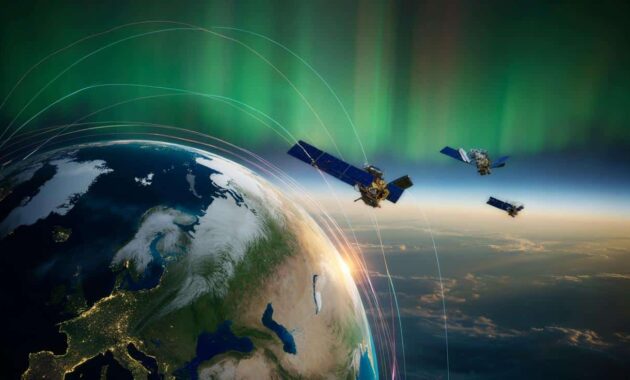
Astrophysicists poring over satellite data say the magnetic field is shifting faster than earlier models captured, nudging compasses, pressuring navigation systems, and subtly reshaping where auroras dance. We’ve all had that moment when a map app spins and we feel lost, even in our own city. Now imagine that feeling scaled to airlines, satellites, and power grids. The numbers aren’t apocalyptic, but they’re real—and they’re accelerating in places that matter.
It was just before dawn on a frosty airfield when a pilot tapped the compass and frowned. The runway numbers still read the same paint, yet the heading on his screen had slid a degree since last season. He shrugged, logged it, and trusted the avionics—because that’s what you do when the sky won’t wait. Far overhead, a trio of European satellites traced the planet’s magnetic heartbeat, teasing out quivers you and I can’t sense. One signal kept pulsing louder. Something is moving faster than we thought.
Earth’s magnetic field is on the move—faster in key places
Picture the north magnetic pole as a restless traveler. For most of the 20th century it wandered, slow and meandering, but then it picked up speed—tens of kilometers each year—angling from Canada toward Siberia. That sprint forced cartographers to chase it with updates. Today’s fresh analyses, blending ground observatories with the ESA Swarm mission and other satellites, show not just steady drift but spikes—“jerks” that push local directions off by degrees in shorter bursts.
The proof has been turning up in odd corners of daily life. Tampa International famously renumbered runways when headings drifted enough to confuse pilots, and runways across Alaska and the Nordics have done the same. The World Magnetic Model needed an unscheduled update in 2019 because the pole outran the math. In the South Atlantic, a weak spot in the field has been spreading and deepening, nudging satellites to reboot more often and giving spacecraft operators a small but nagging headache.
What’s propelling this quickening isn’t up in space. It’s down in the outer core—3,000 kilometers beneath your feet—where liquid iron flows like weather and builds the field we live inside. When those flows speed up or shift direction, the magnetic lines at the surface respond, sometimes surging faster than our long-term averages predict. Geophysicists track these accelerations as “secular variation,” and every few years they catch a magnetic jerk—a telltale sign of the core’s churning changing gears.
How to live with a moving magnetic world
Start with your own true north. Look up your local magnetic declination—the angle between magnetic north and true north—using a reliable tool like NOAA’s online calculator or a national geophysical survey map. Note the annual change listed there. Update your hiking compass bezel to that number, and recalibrate your phone by moving it in a slow figure-eight away from metal and wiring. This tiny ritual makes maps line up with the real terrain under your boots.
Watch your environment for little saboteurs. Steel watchbands, a car hood, even a speaker magnet can bend a compass reading. If you shoot drones, refresh the home point after each takeoff and keep firmware current, especially if you fly near the South Atlantic Anomaly or at high latitudes. Let’s be honest: nobody does that every day. Still, baking it into trips that matter—the mountain traverse, the ocean crossing, the aurora chase—pays off when the sky gets moody.
Pros are adapting in small, practical ways. Airline dispatchers review heading drifts on the routes that hug higher latitudes, and runway managers audit numbering when the local magnetic direction slides too far. Satellite teams schedule safe modes as they pass through weaker field patches to avoid spurious resets.
“The field isn’t failing—it’s breathing,” a mission scientist told me. “Our job is to listen closely enough to move with it.”
- Check your local declination once a year and note the annual change.
- Calibrate compasses and drones away from metal, wiring, and parked vehicles.
- Follow space-weather alerts during solar storms; postpone delicate tasks until the all-clear.
What could change next
The faster shift doesn’t mean catastrophe; it means tighter choreography. Models like the World Magnetic Model and the International Geomagnetic Reference Field are getting revised more often, and they’re pulling in higher-resolution satellite data to catch those jerks sooner. If you work with maps, aviation, pipelines, or long-haul communications, expect more frequent guidance updates and a stronger nudge to automate corrections that used to be manual. The story here is not panic—it’s precision.
➡️ Hair professionals recommend this cut for women in their late 30s with fine ends
➡️ The curious trick of placing a wooden spoon over boiling pasta water to prevent spills
➡️ Gloomy weather in Toulon: this light, airy spinach gratin is the ideal dish to brighten your day
➡️ The clever trick of cleaning greasy kitchen cabinets with warm water and dish soap foam
➡️ Why sprinkling lemon juice on apples before baking makes pies brighter in flavor
➡️ Aluminum foil in the freezer: the simple hack winning over more households
| Point clé | Détail | Intérêt pour le lecteur |
|---|---|---|
| Faster magnetic drift | New satellite analyses show quicker regional changes and magnetic “jerks” | Explains why compasses, runways, and models need earlier updates |
| South Atlantic Anomaly growth | Weaker field patch expanding and shifting, triggering satellite resets | Context for device glitches, GPS momentary oddities, and aurora shifts |
| Practical adaptation | Update local declination, calibrate devices, follow space-weather alerts | Simple steps to keep navigation and planning reliable |
FAQ :
- Is Earth losing its magnetic shield?The field fluctuates, and parts of it are weakening while others strengthen. Satellites show short-term accelerations and regional changes, not a sudden collapse.
- Why does the magnetic north pole move?Liquid iron in the outer core flows and swirls, generating the field. When those flows shift, the pole’s position and the field’s intensity shift with them.
- Will this affect flights and runways?Yes, gradually. Airports sometimes renumber runways when headings drift, and avionics databases get updated to keep navigation aligned with reality.
- Should hikers and sailors change anything?Check your local magnetic declination yearly, recalibrate compasses, and carry offline maps. In a storm, switch to true bearings or verified waypoints.
- Are we headed for a magnetic reversal soon?Reversals happen on geologic timescales and aren’t predictable to a specific date. Current signals point to dynamic drift and regional anomalies, not an imminent flip.