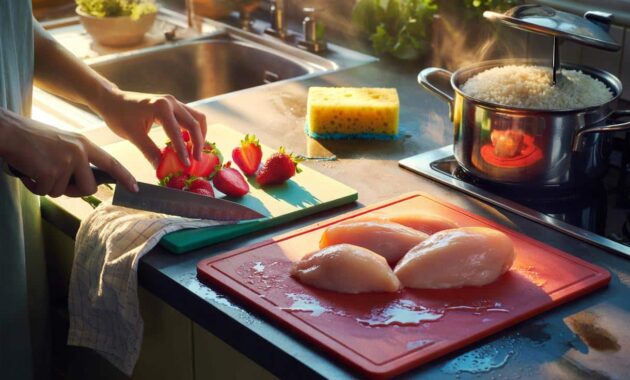
Eliminate what makes you sick without you noticing.” Not the dramatic stuff. The quiet things. The wet sponge, the warm rice, the towel that has seen too many hands. These are the risks that slip through a normal day.
I was standing in a friend’s kitchen watching her slice strawberries for her kids. The board looked clean, the knife gleamed, and the sun was forgiving. Then she wiped the blade on a dish towel and went back to chopping. No one gasped. No violins. Just a tiny gesture that happens in a million homes. We’ve all had that moment when speed wins, and habits drive the bus.
The next day, another family she knows was down with stomach cramps. Different house, same rituals. Same invisible chain. It made me look harder at my own kitchen, at what I touch without thinking. The places I believe are safe because they look safe. One small change can break that chain. One small miss can keep it alive.
Where the real threats hide
The riskiest items in your kitchen are often the humblest: sponges, towels, cutting boards. They collect moisture, food residue, and warmth. That’s a party for microbes. A sponge left damp overnight can hold more bacteria than a trash can. The towel on the oven door becomes a communal handshake. It feels clean. It isn’t.
Think about cooked rice. Left in the pot on the stove, steaming and innocent. Bacillus cereus can multiply in warm rice fast. The rule is simple: cool it quickly in shallow containers and refrigerate within one hour. Reheat to 165°F (74°C). That number is a boring hero. Your gut will thank you for respecting it.
Here’s what food safety experts keep repeating: the danger zone is 40°F to 140°F (4°C to 60°C). Food lingering there invites trouble. The answer isn’t fancy gear. It’s discipline with time and temperature, and separating raw from ready-to-eat. Do not wash raw chicken—water sprays bacteria around your sink and counter. Touch the habits, and you cut the risk. Touch nothing, and it grows.
Small fixes with big impact
Start with the sink and everything that touches it. Replace sponges weekly, or run them through a hot dishwasher cycle daily. Keep a stack of clean towels and rotate them often. Use one towel for hands, a different one for dishes. Wipe counters with hot soapy water, then a food-safe disinfectant. Let it air-dry. The pause matters.
Cutting boards carry stories written in scratches. Keep one for raw meat and poultry, one for produce, one for bread. Plastic boards can go in the dishwasher; wooden boards need a scrub with hot soapy water, then to dry upright. Replace any board with deep grooves. Raw flour is not ready-to-eat—skip tasting cookie dough unless it’s made with heat-treated flour and pasteurized eggs.
Fridge rules are your quiet bodyguards. Store raw meat on the bottom shelf, in a tray. Set the fridge to 40°F (4°C) or colder, and the freezer to 0°F (-18°C). Label leftovers with a date and eat them within three to four days. The quiet threat isn’t the obvious spill; it’s the invisible smear you didn’t wipe.
Habits that stop you getting sick
Defrost safely. Thaw in the fridge, in cold water changed every 30 minutes, or in the microwave right before cooking. Never on the counter. Boil leftover marinade before using it as a sauce. Don’t keep garlic-in-oil at room temperature; refrigerate and use quickly. For cooking, think in targets: 165°F (74°C) for poultry and leftovers, 160°F (71°C) for ground meats, 145°F (63°C) plus rest for whole cuts and fish. A cheap thermometer is worth its drawer space.
➡️ No bleach or ammonia needed: the simple painter-approved method to eliminate damp at home for good
➡️ Psychology reveals why emotional needs can feel hard to identify
➡️ If your compost feeds plants but weakens soil structure, this is the cause
➡️ Cooking Pasta In The Sauce Is Revolutionising Weeknight Dinners And Halving Prep Time
➡️ The Simple Trick That Makes Scrambled Eggs Extra Creamy Every Single Time
➡️ Pensions will rise from March 8, but only for retirees who submit the missing paperwork on time
Let’s be honest: nobody really does that every day. The shortcut is seductive. So make it easier than the shortcut. Keep thermometers in view, towels in reach, boards color-coded. Switch to paper towels during raw meat prep, then toss. Wash hands longer than feels cool—20 seconds with soap. Keep your fridge at 40°F (4°C) or colder, and you’ve already cut a giant slice of risk.
There’s also the weird stuff we forget about. Flour dust around the mixer. Cracks in wooden spoons. Dented cans and bulging jars. Sprouts that look fresh but carry risk for the very young, pregnant, elderly, or immunocompromised.
“Food safety isn’t a vibe. It’s a system of boring, repeatable moves that keep families well.”
- Throw away bulging or badly dented cans—botulism is rare, but ruthless.
- Cool casseroles fast in shallow pans; don’t leave that pot to “finish cooling” on the stove.
- Rinse produce under running water; skip soap and specialty washes.
- Wipe fridge door seals; mold loves the rubber folds you don’t see.
A safer kitchen, one small promise at a time
This isn’t about fear. It’s about quiet confidence. Pick three habits this week, and own them: separate boards, date leftovers, wash that towel pile daily. Next week, add one more. Your kitchen will feel calmer because it is. Friends will pick up your rhythms without you preaching. Share the good shortcuts, the brand of pen you like for dating containers, the thermometer you actually use. Post the cooking temperatures inside a cupboard door. Talk about the rice trick. The more we say it out loud, the less mysterious it gets. One day, your kid will grab the right board without asking. That’s the win.
| Point clé | Détail | Intérêt pour le lecteur |
|---|---|---|
| Separate and sanitize | Different boards for raw and ready-to-eat, hot-wash tools, rotate clean towels | Cuts cross-contamination without slowing dinner |
| Time and temperature | Danger zone 40°F–140°F (4°C–60°C), cool fast, reheat to 165°F (74°C) | Stops bacterial growth you can’t see or smell |
| Smart storage | Raw meats on bottom shelf, label leftovers, fridge at 40°F (4°C) or colder | Prevents leaks, guesswork, and waste |
FAQ :
- Is the 5-second rule real?Not really. Transfer happens on contact, especially on moist foods and dirty surfaces. If it drops, weigh the risk and the surface honestly.
- Can I microwave a sponge to sanitize it?Heat can miss spots and cause hazards. Better: run it through a hot dishwasher cycle or replace it often. Cheap, simple, effective.
- Do I need special fruit and veg washes?No. Cold running water and friction do the job. For firm produce like melons, scrub the rind before cutting.
- How long can leftovers stay in the fridge?Three to four days for most cooked dishes. Reheat to 165°F (74°C). When in doubt, toss it—your gut is not a science experiment.
- Is it safe to eat bread with a small spot of mold?Skip it. Mold threads go beyond what you see in soft foods. Hard cheese is a rare exception where cutting a generous margin can work.
Originally posted 2026-03-09 08:48:00.