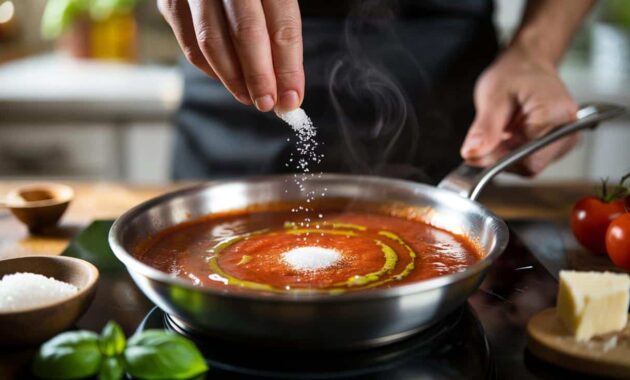
The difference often hinges on small choices you barely notice.
Chefs make one of those choices almost by instinct: a tiny spoon of sweetness. Not to sweeten, but to steady flavor.
Why sweetness steadies the acid
Tomatoes carry citric and malic acids. Long simmering concentrates both. The result can taste sharp, a little metallic, or simply tiring on the palate. A small touch of sugar lowers the perceived sourness. It lets the fruit notes show up. It nudges aroma forward without stealing the scene.
Your tongue reads taste as a team sport. Sweetness dampens sour. Salt heightens savory. Fat smooths rough edges. Together they create balance that feels rounded and clean. Chefs lean on that harmony because diners feel it before they can name it.
Sugar should not make sauce taste sweet. It should make the tomato taste more like tomato.
The chemistry in the pan
Most tomatoes sit around pH 4 to 4.6. As water cooks off, acids concentrate faster than natural sugars. That shift can flatten your sauce or make it buzzy. A pinch of sucrose raises sweetness just enough to mask harshness. It does not change food safety. It does not caramelize at sauce temperatures. It simply recalibrates how your brain reads the bite.
| Lever | What changes | Watch-out |
|---|---|---|
| Small sugar pinch | Lowers perceived sourness, lifts fruit aroma | Too much tastes dessert-like |
| Salt | Amplifies savoriness and depth | Over-salting locks in harshness |
| Olive oil or butter | Softens texture, carries aroma | Greasy finish if heavy-handed |
| Time | Reduces water, concentrates flavors | Too long can darken and mute |
| Tomato choice | Varies natural sweetness and acidity | Winter fruit skews sharper |
When to add it and how much
Add sugar late. Early additions get lost as the pot reduces. Taste when the sauce thickens and the raw edge fades. If the sides of your mouth seize or the aftertaste lingers sharp, you likely need a touch.
- Start with 1/4 teaspoon per 500 g of tomatoes.
- Stir, simmer one minute, and taste again.
- Rarely go beyond 1/2 teaspoon per 500 g.
- Factor in salt, oil, and any wine you used.
- Adjust in tiny steps; you cannot take sweetness back.
Add sugar at the end, not the start. If you can taste sugar, you added too much.
Canned tomatoes vary by brand and season. Some lots taste bright and balanced without help. Others skew tinny because of canning variability. Winter tomatoes in the UK and US often need more help than high-season fruit. Taste first. Decide second.
Tomato varieties change the game
Plum types like roma reduce neatly but read a bit flat. Cherry tomatoes pack higher natural sugars, so they need less correction. Heirloom mixes add perfume but can flood the pot with water. Paste-style Italian varieties tend to offer a nice middle ground. Ripeness matters just as much as type. A ripe tomato brings sweetness you do not need to add from the cupboard.
➡️ In Australia, an 8 cm larva found in a patient’s brain
➡️ “Soft and ready in 10 minutes”: Christophe Felder’s secret gingerbread recipe
➡️ Why walking barefoot on cold floors can make your whole body feel colder
➡️ Why you keep rehashing old arguments in your mind and the closure technique that stops the loop
➡️ Stop tossing toilet paper rolls: an overlooked treasure with many uses
➡️ Archaeologists uncovered a perfectly preserved Roman bathhouse under a modern parking lot
Alternatives if you avoid sugar
You can balance sour without table sugar. Several pantry moves do the job while keeping a traditional profile.
- Grated carrot: adds gentle sweetness and body as it melts into the sauce.
- Long-cooked onion: brings natural sugars and a mellow base after a slow sweat.
- Roasted garlic: softens edges and adds aroma without obvious sweetness.
- A knob of butter: rounds acidity and gives a silkier mouthfeel.
- Parmesan rind: adds umami that distracts from sourness and deepens flavor.
- A splash of whole milk or cream: softens final acidity, especially for kids.
Baking soda neutralizes acid fast, but it can mute brightness and add a soapy note. Use sparingly or skip it.
What chefs know but rarely say
Restaurant crews chase consistency. Produce shifts. Diners change. A micro-adjustment delivers predictable results across busy services. The pinch works because it respects the tomato. It fixes perception rather than rewriting the recipe. This is why the move shows up in kitchens from Milan to Manchester. It is not a hack. It is a control.
Signals your sauce needs help
Use your senses, not a strict rule. The pot tells you when to act.
- The aroma smells bright but thin after 20 minutes.
- Your tongue puckers hard at the sides after one spoonful.
- The finish tastes a little metallic or canned.
- Salt readjustments do not fix the bite.
A simple routine you can repeat
Build a habit you can trust on a weeknight. Keep the steps short and clear.
- Sweat onion in olive oil until sweet, not browned.
- Add garlic and tomato paste; cook until brick red.
- Tip in tomatoes; crush and simmer uncovered.
- Season with salt; add a sprig of basil or a rind if you like.
- When thick and glossy, taste for sourness.
- Add a small sugar pinch if needed; wait a minute and taste again.
- Finish with oil or butter for sheen; remove herbs; serve.
Gear and handling that matter
Use non-reactive pots. Acid and aluminum create off flavors. Keep a gentle simmer rather than a fierce boil. Hard boiling can split the sauce and roughen texture. Crush tomatoes by hand or with a wooden spoon. Over-blending seeds can boost bitterness. Season in layers. Salt early, sugar late.
Extra notes for different diets and kitchens
If you track sugar, the amounts here are tiny. A half teaspoon adds roughly 2 grams of sugar to an entire 700 g pan. Spread across four portions, that is about 0.5 grams per serving. Carrot or onion can replace it, though you add carbohydrates either way. Taste decides more than labels.
Want to test the effect at home? Cook two small pans side by side with the same tomatoes. Adjust salt equally. Add a 1/4 teaspoon of sugar to one pan at the end. Let both rest for five minutes. Taste warm, not boiling hot. Most tasters pick the balanced pot without noticing the cause. That is the goal.