European defence planners are quietly rethinking their most ambitious weapons project, as digital warfare reshapes priorities faster than expected.
Behind closed doors, France and Germany are debating whether tomorrow’s battlefield will be won less by cutting-edge jets and more by the invisible networks linking them. A once-flagship fighter aircraft programme now risks being stripped back, or even sidelined, in favour of a vast “combat cloud” meant to knit together drones, satellites, sensors and ground forces in real time.
Franco-german flagship under pressure
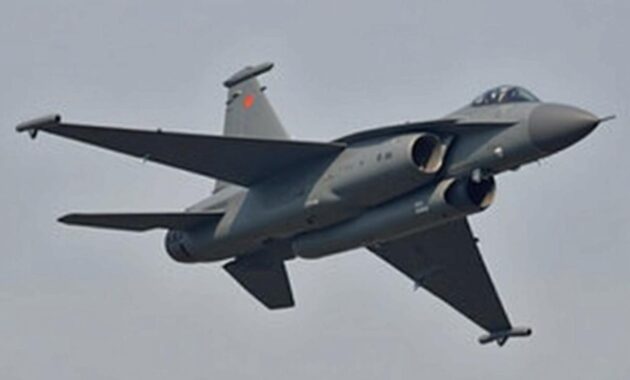
For years, Paris and Berlin have promoted the Future Combat Air System (FCAS) as Europe’s answer to the US F‑35 and emerging Chinese stealth jets. The project, which also includes Spain, was originally built around a sixth‑generation fighter aircraft surrounded by swarms of drones and advanced weapons.
Costs have surged, timelines have slipped and political priorities have shifted. FCAS is no longer just a cutting-edge fighter; it has become a test of whether Europe can still cooperate on major defence technology without relying on Washington.
The heart of the debate: should Europe keep funding an ultra‑expensive fighter jet prototype, or jump ahead and focus on the digital backbone that will connect all forces?
According to officials familiar with the talks, both capitals are now weighing a radical shift of resources away from the manned jet and towards the “air combat cloud” that sits at the core of the FCAS vision.
What the combat cloud actually is
The combat cloud is not a single piece of hardware. It is a secure, high-speed battlefield network that pulls in data from every available sensor, analyses it and pushes tailored information back to pilots, drone operators and commanders.
In practice, that might mean a German radar station, a French drone, a Spanish frigate and a US satellite all feeding into the same digital picture. Algorithms crunch the incoming streams and highlight threats, targets or safe corridors in seconds.
- Aircraft share radar and targeting data instantly.
- Drones relay live video and electronic signals to ground forces.
- Commanders receive a constantly updated map of enemy positions.
- Weapons are assigned and retasked by software based on changing conditions.
Instead of a single “hero jet” doing everything, the combat cloud turns every asset into a node of a much larger, coordinated system.
This shift mirrors lessons from Ukraine, where cheap drones, satellite internet and rapid data-sharing have often mattered more than the latest high‑end platform.
➡️ The real reason your hands feel cold even in warm rooms
➡️ Nuclear energy: how PWRs, EPRs and SMRs work, costs, safety and the future of civil nuclear power
Why the fighter jet may be scaled back
The manned FCAS fighter, sometimes referred to as the Next Generation Fighter (NGF), has been the political showpiece. Yet it is also the riskiest and most expensive element.
France, with its Rafale programme, and Germany, with its mixture of Eurofighters and F‑35s, already have modern jets likely to fly into the 2060s. Replacing them entirely with a brand-new aircraft design in the 2040s or 2050s may make less sense if incremental upgrades can keep current fleets competitive.
At the same time, budgets are finite. Berlin is under pressure from domestic parties to balance heavy defence spending with social priorities. Paris is trying to fund nuclear deterrence, overseas operations and industrial support without blowing through deficit targets.
| FCAS component | Estimated challenge | Political appeal |
|---|---|---|
| Manned fighter jet (NGF) | Very high cost, long development time, risk of delays | Strong symbolism, industrial jobs, national prestige |
| Remote carriers (drones) | Medium cost, faster development, crowded market | Operational value, export potential, flexible use |
| Combat cloud | Complex integration, cybersecurity challenges | High operational impact, aligns with NATO, dual‑use tech |
Officials now argue that funds poured into a pristine stealth jet might bring more real‑world benefit if spent on software, networking and secure data links that can boost existing fleets’ performance almost immediately.
Internal tensions between partners
Franco‑German defence cooperation has never been simple. FCAS is intertwined with another big project, the Main Ground Combat System (MGCS), a future tank programme also shared by Paris and Berlin. Each side keeps a close eye on the balance of industrial benefits.
Germany has been wary of France’s aerospace champion Dassault taking too dominant a role. France, in turn, worries that German insistence on industrial “fairness” can slow decision‑making to a crawl.
Beneath the technical jargon lies an old question: who leads, who pays, and who benefits most from Europe’s defence spending?
Adding to the complexity, Spain joined FCAS later and wants a meaningful share of work, especially in systems integration and sensors. That makes the industrial puzzle even harder to solve if the core fighter is downsized or delayed.
Pressure from the United States and NATO
The United States looms over the conversation. Many European allies have already bought the American F‑35, including Germany, Italy, the Netherlands and others. The more F‑35s land on European runways, the less urgent a separate European jet may appear.
On the other hand, NATO and the US are strongly pushing for allies to improve “interoperability” – the ability of different militaries to share data and run operations together. A robust combat cloud fits that demand more directly than a single national fighter design.
US defence companies are also investing heavily in similar concepts, such as the Joint All‑Domain Command and Control (JADC2) architecture and the Collaborative Combat Aircraft (CCA) programme that will link piloted jets to “loyal wingman” drones.
If Europe builds its own combat cloud, it could plug into NATO systems while keeping sensitive data and software under European control. That argument is gaining traction in both Paris and Berlin.
How a combat cloud could change air warfare
Shifting to a cloud‑centric model would alter how air forces plan and fight. Instead of sending a few high‑end jets deep into hostile territory, commanders could distribute risk across many cheaper platforms connected by secure networks.
An operation might unfold like this: satellites detect suspicious movement near a border; drones fly in to verify; electronic-warfare aircraft disrupt enemy radars; ground-based launchers fire stand‑off missiles; and only later do manned fighters move in to secure airspace, guided by a detailed, shared picture.
The jet becomes the tip of a digital spear, not the entire weapon.
Such an approach offers several advantages:
- Fewer pilots have to enter the most dangerous zones.
- Commanders can swap roles between platforms quickly as the situation changes.
- Loss of a single aircraft carries less strategic cost than before.
- Software updates can unlock new capabilities without building new airframes.
Risks, delays and technical obstacles
None of this is guaranteed to work smoothly. Building a secure, resilient combat cloud is arguably harder than designing a single advanced jet.
European forces use a patchwork of radios, datalinks and national systems, many of them not designed to talk to each other. Standardising communication, encryption and data formats across three countries – and potentially more later – is a political and technical headache.
Cybersecurity is another concern. A combat cloud is only as strong as its weakest node. If an adversary hacks a drone, a command centre or a satellite uplink, they could distort the shared picture or access sensitive information.
There is also a risk that focusing on software and networks, which are less glamorous than a sleek new jet, could struggle to maintain political support once attention moves elsewhere.
Key concepts explained
The debate around FCAS uses niche jargon that hides relatively simple ideas. A few terms are central to the shift now being discussed.
Remote carriers: These are advanced drones designed to work alongside piloted aircraft. They can carry sensors, jammers or weapons and fly ahead of the main force to scout or absorb enemy fire. Because they are cheaper and unmanned, military planners are more willing to accept losing them in combat.
System of systems: Instead of viewing a fighter, a drone or a radar as separate projects, planners treat them as parts of a single, layered system. The performance of the whole depends on the way they communicate and cooperate, not just on the specs of each individual machine.
Data fusion: This refers to combining information from different sensors into one coherent picture. A weak radar contact, a heat source from an infrared camera and an intercepted radio signal may, together, reveal a hidden missile battery.
What this shift would mean for Europe’s defence industry
If Paris and Berlin do downgrade the centrality of the new fighter, winners and losers will emerge across Europe’s defence firms.
Companies focused on avionics, software, secure communications and artificial intelligence could gain influence, as budgets tilt towards digital infrastructure. Traditional airframe builders may see fewer headline contracts but still play a role in upgrades and drone design.
At the same time, the gap between digital and industrial capabilities could widen. Countries with strong tech sectors – and the ability to keep talent at home – will be better positioned to shape the future combat cloud. Others risk becoming buyers, not partners, in the key systems that will define European air power for decades.