In Prague and Brussels, a high‑stakes nuclear deal is turning into a legal and political thriller watched closely across Europe.
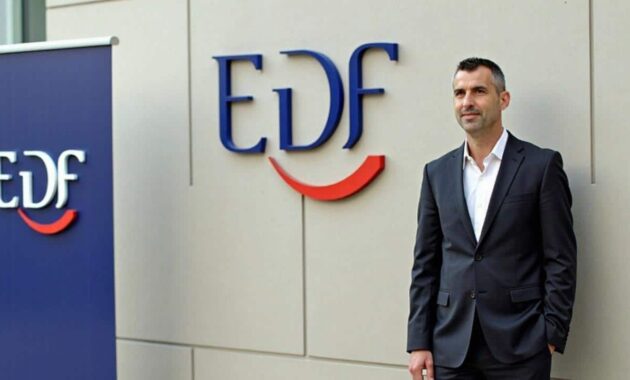
The future of a €16.4 billion nuclear project in the Czech Republic, billed as a “contract of the century”, is no longer as settled as it looked. French energy giant EDF, initially sidelined, could stage a comeback if the European Commission decides that Prague broke EU rules when it chose a rival builder for its next-generation reactor.
What is this massive contract really about?
The Czech government wants to build at least one new nuclear reactor, with options for more, at the Dukovany site in the south‑east of the country. The project is a central piece of Prague’s strategy to replace ageing coal plants, cut emissions and secure long‑term electricity supplies.
The headline figure attached to the project is €16.4 billion, covering construction, equipment, and long‑term support. For a country the size of the Czech Republic, this is one of the largest infrastructure contracts in its history.
For EDF, the Czech reactor project is a rare chance to export its nuclear technology inside the EU at major scale.
The Czech state, which controls the utility company ČEZ, launched an international tender inviting several nuclear players. EDF, with its EPR and EPR2 reactor designs, was among the key bidders, facing competition from US‑based Westinghouse and other suppliers.
How EDF found itself on the sidelines
During the tender, Czech authorities gradually narrowed the field. In the end, a rival consortium emerged as the preferred bidder. Local reports have pointed to a combination of cost, perceived construction risk and political considerations behind the choice.
EDF, which has faced delays and cost overruns at some of its EPR projects in France and the UK, was seen by Prague as a higher‑risk option. The French group has spent years trying to show that its new EPR2 design is more standardised, cheaper to build and easier to replicate.
Yet the decision did not go uncontested. Several competitors, as well as policy groups in Brussels, began to question whether Prague had followed EU rules on competition, state aid and procurement transparency.
Why Brussels is now involved
The European Commission has the power to review large energy projects when state aid or competition issues arise. In the Czech case, the financing structure of the nuclear plant involves state guarantees and possible price support, which fall under EU scrutiny.
➡️ Ibuprofen and paracetamol: everyday painkillers at the heart of a looming global health crisis
➡️ The United States wants to use a supersonic aircraft turbine to power its data centres
➡️ Vitamin B7 Becomes A Key Piece In Understanding Cancer Resistance
➡️ I’m a hairdresser and this is the best advice I give to women over 50 who colour their hair
The Commission is examining whether the Czech tender and its financial design comply with EU competition and state aid rules.
If Brussels finds that the process unfairly favoured one bidder or violated procurement principles, it can demand changes, impose conditions, or even require a new tender. That is where EDF’s hopes have been revived.
How EDF could still come back into the game
EDF has not publicly claimed victory or filed an official complaint, but it has made clear it remains interested. Legal experts say several scenarios could reopen the contest.
- A partial reshaping of the project’s financing, forcing Prague to renegotiate with all short‑listed bidders.
- A full annulment of the tender, leading to a new competitive process.
- Specific conditions from Brussels that make the current deal unattractive or unworkable for the chosen rival.
Any of these would give EDF another shot at securing the Dukovany contract. French officials have also lobbied in Brussels, arguing that EDF’s nuclear technology is proven and that EU energy security benefits from a strong European supplier.
The political angle: Paris, Prague and Brussels
The project sits at the intersection of several political priorities. For France, nuclear exports are a strategic asset. For the Czech Republic, the project is about securing baseload power without depending too heavily on gas imports, including from Russia. For the EU, the deal touches on competition policy, climate goals and energy independence.
Recent debates around the EU’s classification of nuclear energy as “green” for sustainable finance have already shown how divisive the topic can be. A decision by the Commission that reopens the Czech tender would likely spark criticisms from governments wary of Brussels interfering in national energy choices.
Any move by the Commission risks being framed either as a defence of fair competition or as overreach into national energy policy.
Why this contract matters beyond the Czech Republic
The Dukovany project is being watched by other Eastern and Central European countries planning nuclear or large low‑carbon projects. Poland, Slovakia, Romania and Bulgaria all have ongoing or planned reactor tenders or refurbishments.
A ruling that Prague’s tender fell short of EU standards could become a reference point for future bids. It might push governments to design more transparent procurement frameworks and to spread risk differently between public and private partners.
| Country | Nuclear plans | Relevance to EDF |
|---|---|---|
| Czech Republic | New units at Dukovany, options for Temelín | Current “contract of the century” tender in dispute |
| Poland | First nuclear fleet under design | EDF competing or lobbying for future projects |
| Romania | Cernavodă expansion and refurbishments | Potential collaboration on services and technology |
| Slovakia | Debate on life‑extension and possible new build | Smaller but symbolically important market |
For EDF, winning Dukovany would strengthen its argument that European reactors should rely on European designs rather than US or Asian technology. The company is already building or operating EPR‑type reactors in France, the UK and China, and is under pressure to show that costs and timelines are improving.
What the European Commission will look at
When assessing the Czech project, officials in Brussels are expected to focus on several technical and legal aspects.
- Does the chosen financing model distort competition within the EU electricity market?
- Were bidders treated equally in the tender, including on safety, security and technology criteria?
- Is the level of state support proportionate to the public benefits claimed, such as decarbonisation and security of supply?
These questions may sound abstract, but they shape whether a project of this size can go ahead. If Brussels concludes the aid is excessive or poorly targeted, it can require modifications that could change the economics of the entire deal.
Key terms behind the legal battle
Two concepts lie at the heart of the upcoming decision.
State aid: Under EU law, governments can support projects, but the support must not unfairly distort competition. In energy, that usually means examining guarantees, price floors and long‑term contracts.
Security of supply: Governments argue that power plants providing reliable electricity for decades justify state involvement. Brussels tends to agree, but still asks if there are cheaper or less distorting ways to achieve that security.
The Czech government is expected to argue that nuclear is a strategic asset, that private investors alone would not shoulder the risk, and that the chosen bidder offered the best value for money. Rivals may claim that data access, evaluation methods or risk assumptions were tilted in favour of the winner.
What this could mean for energy bills and climate goals
For Czech households and businesses, the main concern is cost. Nuclear plants require massive upfront investment but can deliver relatively stable prices once built. Delays or legal battles can push costs up and postpone the date when the plant starts generating power.
If the Commission requires a new tender, the project timeline could slip by several years. That gap would have to be filled by other sources: more gas plants, more renewables backed by storage, or life‑extension of existing reactors and coal units. Each path comes with different climate and cost implications.
On the climate side, Prague has pledged to reduce emissions while phasing down coal. Nuclear offers low‑carbon baseload power, yet every year of delay risks locking in more fossil fuel use. A legal victory for EDF would not change that tension; it would just shift who builds the plant.
Scenarios: what happens next?
Energy analysts often sketch out a few simple paths from here.
- Status quo: The Commission approves the project with minor tweaks. The selected rival proceeds, and EDF accepts the loss while focusing on other markets.
- Conditional approval: Brussels imposes conditions on financing that force Prague back to the table with all bidders. EDF gets fresh leverage to negotiate or offer a revised proposal.
- Rejection: The current deal is deemed incompatible with EU rules. The tender must be relaunched, giving EDF a chance to reposition itself as a safer, more standardised option.
Each scenario has different consequences for investors, for the Czech power mix, and for the credibility of EU energy policy. Markets will watch closely, because similar nuclear deals are on the horizon elsewhere in Europe.
For readers trying to gauge personal impact, one simple rule of thumb applies: large nuclear projects shape wholesale prices for decades, not months. The decision on Dukovany will not move next year’s electricity bills on its own. But as part of a wider wave of nuclear and renewable investments, it will help set the long‑term cost and reliability of power across Central Europe.
Originally posted 2026-03-07 19:55:00.