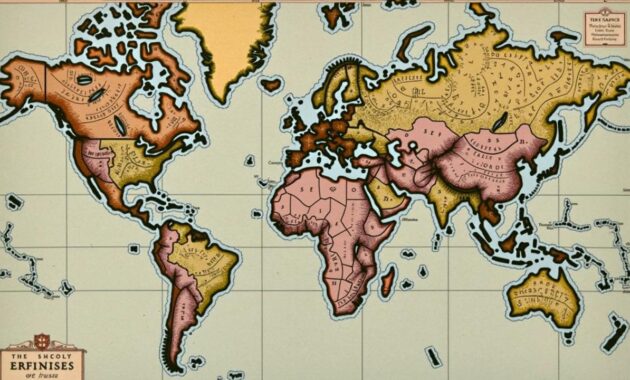
Out at sea, ships follow lines on charts that look timeless.
Few people ever ask who drew them, or when.
Those lines, depths and coastal details are the result of centuries of patient work. Buried in that story is a quiet French record, older than many nations, and still influencing how the oceans are mapped today.
France’s secret maritime record
Ask most people which country leads maritime history and many will say the United Kingdom. Nelson, the Royal Navy, Greenwich: the imagery is strong. Yet on one very technical point, France gets there first.
France has maintained a national hydrographic service for 305 years, making it the oldest continuously operating service of its kind in the world, ahead of the UK.
Hydrography is the science of measuring and describing seas, coasts and waterways. It produces the nautical charts that keep ships away from reefs, sandbanks and shallow waters. Behind every container ship entering a port or every ferry crossing a channel stands an army of surveyors, cartographers and oceanographers.
In France, that army has an address and a date of birth. The country’s national hydrographic service traces its origins back to the early 18th century, when the monarchy ordered systematic charting of coasts for defence and trade. Since then, governments have changed, borders have shifted, but the service has continued to operate.
Why hydrography matters more than most people think
Hydrographic offices do not grab headlines. They work in the background, far from political drama. Yet their output underpins global trade and maritime safety.
- Cargo ships rely on up‑to‑date charts to navigate narrow straits.
- Fishing fleets need depth and seabed data to operate safely.
- Navies plan operations based on detailed knowledge of coastal waters.
- Offshore wind farms and undersea cables depend on seabed surveys.
Without modern hydrography, ports would be riskier, insurance costs higher, and collisions with uncharted obstacles more frequent. France’s long-running service gives it a deep archive of observations, tide measurements and historical charts, which can still be useful today for understanding how coasts have changed.
Long, continuous hydrographic records help scientists track coastal erosion, sea-level change and sediment movement over centuries.
How France pulled ahead of the United Kingdom
Both France and the United Kingdom embraced naval power early. Both invested in charting. The difference lies in the institutional timeline.
➡️ Reverse colouring: the secret salon trick that makes salt and pepper hair look younger
➡️ Mirror bacteria: scientists issue global call over “extreme” biological risks
➡️ Planned C‑sections Linked To Higher Childhood Leukaemia Risk, Warns Study
In France, royal orders in the early 1700s created a dedicated structure focused on hydrographic surveying and the production of official charts. This organisation, though renamed and reorganised several times, has continued to function without interruption, which gives France that 305‑year record.
The United Kingdom’s history is close behind. The British Admiralty set up its Hydrographic Office in the late 18th century to systematise chart production for the rapidly expanding Royal Navy. British charts became standard in many parts of the globe, especially throughout the Empire, but the formal starting date still comes decades after the French initiative.
From royal project to strategic public service
What began as a royal tool for naval power gradually became a national public service. Over time, the French hydrographic organisation shifted from serving mainly warships to serving all maritime users: merchant fleets, fishing, recreational sailors and coastal planners.
That continuity has helped France build strong technical expertise. Generations of officers and scientists have contributed observations, corrected old soundings and updated thousands of charts as ports were dredged and coastlines transformed.
The French hydrographic record stretches from wooden sailing ships with lead lines to satellites and autonomous underwater vehicles.
From lead line to lidar: three centuries of change
Three hundred years ago, hydrographers measured depth by dropping a weighted rope over the side of a ship, counting knots as it fell. Progress was painfully slow, and every sounding required manual effort.
Over the centuries, methods evolved radically:
| Period | Main technique | Key impact |
|---|---|---|
| 18th–19th centuries | Lead line soundings and visual bearings | Basic coastal charts, limited offshore coverage |
| Early 20th century | Single‑beam echo sounders | Faster depth measurement along ship tracks |
| Late 20th century | Multibeam sonar, satellite positioning (GPS) | High‑resolution seafloor mapping, precise navigation |
| 21st century | Lidar, autonomous vehicles, big data processing | Rapid surveys, 3D coastal models, dynamic charts |
France’s long-standing service has lived through each of these transitions. It has kept pace, moving from paper charts stored in ship lockers to digital products streamed into electronic navigation systems on modern bridges.
The geopolitical angle: charts as quiet power
Control over accurate charts confers subtle influence. Countries that produce high-quality hydrographic data often set the standards used internationally. For France, with overseas territories in the Caribbean, the Indian Ocean and the Pacific, this matters.
By maintaining its own global capacity to survey and chart, France avoids complete dependence on foreign data. That independence supports its navy, but also its commercial shipping, fisheries and offshore industries.
Hydrography is both a safety service and a quiet instrument of sovereignty on the seas.
The United Kingdom plays a similar game. Its hydrographic office remains a reference, especially for English‑language charts. The friendly rivalry between French and British services has pushed both to maintain rigorous quality and innovation.
How this centuries‑old service affects everyday life
Most citizens will never see a survey vessel or meet a hydrographer. Yet their work touches daily life in subtle ways.
- Consumer goods shipped by sea arrive more reliably when routes are well charted.
- Fuel tankers navigate constrained channels with less risk of grounding.
- Coastal communities receive better flood risk assessments based on accurate seabed data.
- Undersea cables that carry internet traffic are routed using detailed bathymetric information.
Tourism also depends on this infrastructure. Cruise ships entering scenic but narrow fjords or island harbours need extremely precise depth and obstacle data. Recreational sailors download electronic charts distilled from centuries of professional surveying.
Key terms that shape the seas
Hydrography comes with its own technical language, which can feel opaque from the outside. A few terms explain a lot of what this 305‑year‑old service does.
Bathymetry refers to the measurement of water depth, the equivalent of topography at sea. A bathymetric map shows underwater “relief”: ridges, canyons, plateaus and slopes. Hydrographic offices compile bathymetric data to identify hazards and design shipping routes.
Tidal datum is a reference level used to measure depth. Charts need a consistent baseline, often some form of low water level, so that mariners know they have at least the depth indicated. Choosing and maintaining this reference is a technical task that draws on long time series, which France’s service has in abundance.
ENCs, or electronic navigational charts, are digital versions of traditional charts. They feed directly into shipboard systems that can warn of shallow water or restricted areas in real time. The shift from paper to ENCs has transformed how historical hydrographic archives are used and updated.
Looking ahead: a 305‑year legacy in a changing ocean
The oceans are not static. Sea level is rising, storms are getting more intense, and human activity along coasts is increasing. A long-lived hydrographic service gives France a baseline for comparison. Old charts, once just artefacts, become evidence of how shorelines and channels have shifted over time.
That perspective matters for planning new ports, reinforcing coastal defences or opening offshore wind farms. Engineers need to know not just what the seabed looks like today, but how it has evolved over decades. The accumulation of three centuries of observations, checks and corrections gives French planners and scientists a resource that few countries can match.
For the UK and other maritime nations, the French record is a reminder that behind every modern navigation app lies a long, largely invisible chain of decisions, measurements and revisions. Hydrographic services may not trend on social media, yet they quietly stitch together our globalised economy, one depth sounding at a time.